Beyond20 Awarded NASA SEWP VI Contract
Beyond20, a ServiceNow Elite Partner specializing in technology consulting, implementation, and managed services, announced today that it has been awarded…


Organizations are constantly seeking ways to enhance their employee experience. This enhanced focus on employee satisfaction has shown that the loyalty of their employees is one of the most critical factors for success. When searching for the best ways to improve their employee experience, many organizations turn to ServiceNow, seeking to utilize a leading platform for digital workflows to streamline their employee experience, especially in the context of the growing trend towards hybrid and remote work arrangements. In this article, we will explore how leveraging ServiceNow can help organizations enhance their employee experience, with a particular focus on the advantages of continuing with hybrid and remote work models.
While many businesses are now transitioning back to the office, the hybrid work model, which combines in-office and remote work, is here to stay. This shift has significant implications for employee satisfaction and loyalty. While we’re all familiar with the benefits of hybrid work, there are distinct ways that ServiceNow can aid your hybrid work practice. First we’ll dive into some of the tangible benefits for hybrid employees before looking at the ways that ServiceNow can improve your processes, and in turn, the employee experience.
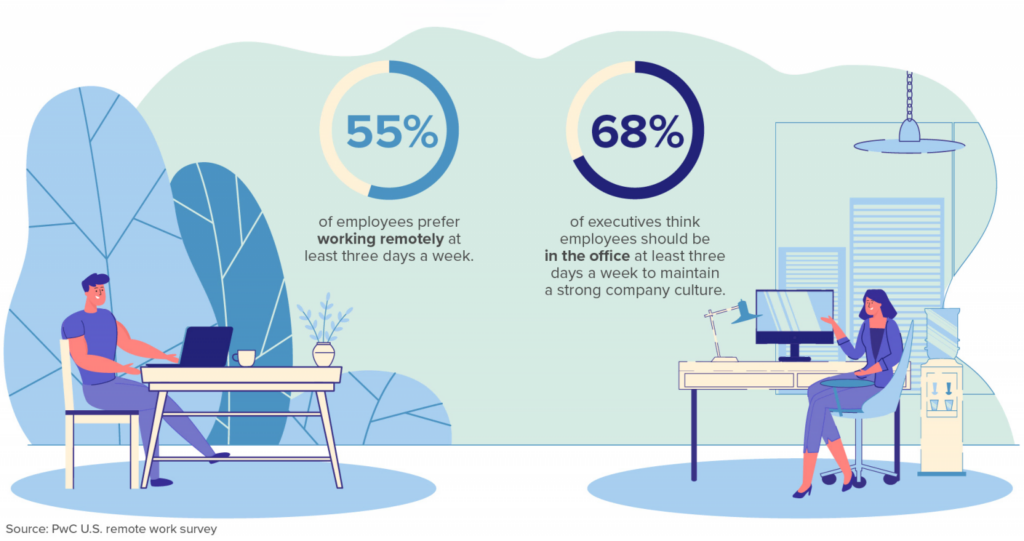
The ability to choose where and when to work is a game-changer for many employees. Hybrid work arrangements give employees the flexibility to align their work schedules with their personal lives. ServiceNow can help organizations manage this flexibility effectively.
By implementing ServiceNow’s workflow automation, employees can easily request remote work days and have them approved in a streamlined manner. Moreover, ServiceNow can ensure compliance with company policies and labor laws regarding remote work, providing a structured approach to flexibility.
Balancing work and personal life is a perpetual challenge, and one that organizations that value their employees try to nail. Remote work, in particular, has the potential to improve this balance significantly. For obvious reasons, spending more time with their families, avoiding long commutes, and creating a work environment tailored to their preferences appeals to a lot of people. But, while they may enjoy this flexibility, the ecosystem and processes that came so naturally in the office, need to continue humming along for remote and hybrid employees. ServiceNow aids in this by automating and facilitating tasks that were time-consuming in the past. For example, by automating time-off requests and approvals, ServiceNow ensures that employees can take breaks and vacations without worrying about work-related paperwork.
One of the most obvious benefits of remote work is the reduction in commute stress. Long commutes can lead to exhaustion and decreased job satisfaction. Remote work eliminates this stress entirely, allowing employees to start their workdays refreshed and focused.
Each employee has unique preferences and needs. Some employees thrive in a bustling office environment, while others prefer the quiet of a home office. Hybrid and remote work models allow organizations to cater to these individual preferences. Now that we’ve explored the advantages of hybrid and remote work for employee satisfaction, let’s dive deeper into the specific processes organizations can improve through the use of ServiceNow.
Efficient onboarding and offboarding processes are crucial for a positive employee experience. ServiceNow’s workflow automation capabilities can significantly improve these processes.
For onboarding, ServiceNow can automate tasks such as provisioning accounts, assigning equipment, and scheduling training sessions. This ensures that new hires have everything they need to hit the ground running and feel welcomed from day one.
Similarly, for offboarding, ServiceNow can help organizations securely and efficiently manage the process of disabling accounts, collecting equipment, and conducting exit interviews. A smooth offboarding experience leaves departing employees with a positive impression of the organization, which can be essential for maintaining a positive employer brand.
Empowering employees to handle routine tasks through self-service portals is a key element of enhancing the employee experience. ServiceNow offers a user-friendly interface that allows employees to access and manage various aspects of their employment.
Through self-service portals, employees can:
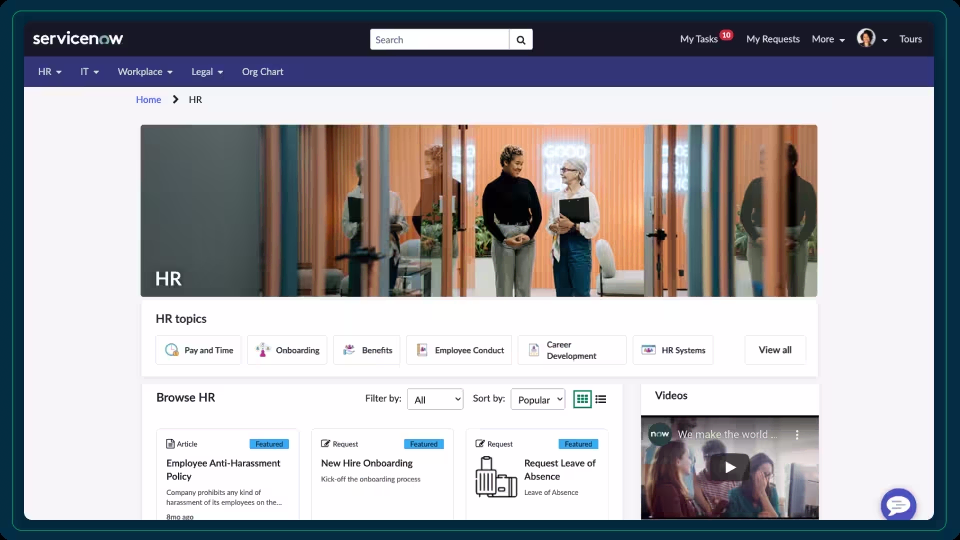
By providing these self-service capabilities, organizations reduce the administrative burden on HR and IT departments while giving employees more control over their work-related tasks. This leads to increased satisfaction as employees can manage their work-related needs more independently and efficiently.
Efficient IT support is essential in the digital workplace. ServiceNow’s IT Service Management (ITSM) capabilities can streamline IT support processes, ensuring that employees receive prompt assistance when they encounter technical issues. Employees can easily submit IT support tickets through the ServiceNow platform, describing their issues and tracking the progress of their requests. ServiceNow can automate the routing of tickets to the appropriate IT staff, prioritize urgent issues, and even suggest solutions based on historical data.
This streamlined approach to IT support not only resolves issues more quickly but also reduces employee frustration and downtime. It contributes significantly to overall employee satisfaction.
Effective collaboration and communication are critical components of a positive work environment, especially in a hybrid or remote work setting. ServiceNow’s integrations with popular collaboration tools like Microsoft Teams, Slack, and Zoom can enhance the employee experience in this regard.
Through these integrations, organizations can:
A connected workplace fosters a sense of belonging and satisfaction among employees, even if they work from different locations. ServiceNow ensures that the technology supporting collaboration is reliable and accessible, making the virtual workplace feel as connected as the physical one.
Transparent and effective performance management is a key driver of employee satisfaction and loyalty. ServiceNow can assist organizations in implementing performance management systems that prioritize communication, feedback, and growth.
With ServiceNow, organizations can:
A well-implemented performance management system supported by ServiceNow ensures that employees understand their role within the organization, have opportunities to grow and develop, and feel recognized for their contributions.
Investing in employee development is not only beneficial for employees but also essential for an organization’s long-term success. ServiceNow can be utilized to implement a robust Learning Management System (LMS) that offers employees opportunities for skill development and career growth.
Through ServiceNow’s LMS, organizations can:
Employees who have access to ongoing learning and development opportunities are more likely to feel engaged, motivated, and loyal to their employers. ServiceNow streamlines the management of these programs, making it easier for organizations to invest in the growth and success of their workforce.
Enhancing employee experience is not just a desirable goal but a strategic imperative. ServiceNow offers a powerful platform for achieving this, with its capabilities for streamlining workflows, automating processes, and customizing solutions to meet individual employee needs. Moreover, the shift towards hybrid work models has highlighted the importance of continued investment in employee satisfaction and loyalty.
By leveraging ServiceNow to create a flexible, personalized, and supportive work environment, organizations can not only attract and retain top talent but also foster a culture of engagement and loyalty. As the culture and expectations within organizations continue to evolve, finding a powerful tool to utilize, like ServiceNow, will remain vital in the quest to enhance employee experience and drive organizational success. In the era of hybrid work, ServiceNow serves as a bridge between remote and in-office employees, ensuring that everyone receives the support and resources they need to thrive. By focusing on enhancing employee satisfaction and loyalty, businesses can foster a motivated, engaged, and committed workforce that is well-prepared for the challenges and opportunities that lie ahead.
Beyond20 is a ServiceNow Elite Partner dedicated to changing work life for our clients through rapid time to value across the ServiceNow platform. We help organizations make ServiceNow work in practice and for people, combining platform-spanning expertise, practical guidance, and hands-on delivery to help teams move with confidence and see value faster.